| Will that Vivien Boniuk presentation be published? I hope so - I want to see what the iHub shilling crowd have to say. Besides "It's a scam and a fraud." Ref: shill SHil/ NORTH AMERICAN noun 1. an accomplice of a hawker, gambler, or swindler who acts as an enthusiastic customer to entice or encourage others. verb 1. act or work as a shill. Shill - Wikipedia en.wikipedia.org A shill, also called a plant or a stooge, is a person who publicly helps or gives credibility to a person or organization without disclosing that they have a close relationship with the person or organization. |
Tuesday, November 7, 2017
Vivien Boniuk presentation

Reuters VNTH background
NANO MOBILE HEALTHCARE INC
https://www.reuters.com/finance/stocks/overview/VNTH.PK
NANO MOBILE HEALTHCARE INC
https://www.reuters.com/finance/stocks/overview/VNTH.PK
Monday, November 6, 2017
Uncovering bacterial cell wall secrets to combat antibiotic resistance
NanoViricides has proven it works on viruses so let's see it work on bacteria next!
November 6, 2017
Cell walls—the jacket-like structures that surround all known bacteria—may turn out to be bacteria's undoing , holding the key to developing new drugs that target it for destruction.
That perspective is shared by many in the medical and scientific communities, including Marcos Pires . Pires, a biochemist at Lehigh University, is spearheading a novel approach to understanding bacterial cell wall changes in response to antibiotics that could be critical to new drug design—an urgent need in light of the growing threat of antibiotic resistance. His approach is so promising it has recently been recognized by the National Institutes of Health with a Maximizing Investigators' Research Award (MIRA).
Antibiotic resistance occurs when bacterial cells adapt to evade a drug designed to kill it. Making changes to the cell wall is one way bacteria accomplish this. Little is known, however, about just how these structures respond when under attack.
With the 5-year $1.94 million MIRA grant, Pires's group will delve deeply into this process through a unique approach that essentially tricks bacteria into revealing where its cell wall is most vulnerable. Such knowledge could help scientists design next-generation antibiotics that circumvent drug resistance mechanisms.
The centerpiece of the research is a process that Pires and his team conduct facilitating live bacteria's absorption of synthetic cell wall fragments constructed in the lab. These fragments are modified with reporter units which then allow researchers to observe, in live bacteria, components of the cell wall machinery under various conditions.
"Bacterial cell walls are unique in their structure and function and are essential to bacterial cells—making them unique targets for the development of antibiotics," said Pires, assistant professor in the Department of Chemistry. "By 'tricking' bacteria into using some of our cell wall building blocks, we get an unprecedented perspective on how they change when challenged with antibiotics."
MIRA is a program of the National Institute of General Medical Science (NIGMS), a division of NIH that provides support for basic research that increases understanding of biological processes and lays the foundation for advances in disease diagnosis, treatment and prevention. According NIGMS, the goal of MIRA is to increase the efficiency of NIGMS funding by providing investigators with greater stability and flexibility, thereby enhancing scientific productivity and the chances for important breakthroughs.
Identifying bacterial cell wall changes that cause antibiotic resistance
The stakes for drug design breakthroughs to treat drug-resistant bacteria are high. Every year in the United States, more than 2 million people are afflicted with resistant bacterial infections. An estimated 23,000 American lives—and 700,000 lives worldwide—are lost yearly as a result of bacterial infections resistant to current antibiotic treatments. These numbers are only expected to grow.
Bacterial cell walls are the target of some of the most powerful antibiotics discovered to date. Cell wall-targeting antibiotics include some commonly prescribed treatments such as penicillin and amoxicillin. Drugs that target bacteria's cell walls are also among the safest as human cells do not have cell walls and are thus unaffected by the treatment.
According to Pires, individual components of the bacterial cell wall machinery are key to bacteria's adaptation response and, therefore, to drug-resistance. One of his team's goals is to identify the cell wall components that bacteria need to successfully adapt and evade the drugs designed to destroy it.
"If we can identify these 'weak spots', said Pires, "we should be able to find ways to inactivate or circumvent them."

Provided by: Lehigh University
Wednesday, July 12, 2017
Selectively killing bacteria with magnetic nanoparticles
On the way to a universal antibacterial and antiviral agent
Read more: Selectively killing bacteria with magnetic nanoparticles
| Posted: Jul 11, 2017 | |
Selectively killing bacteria with magnetic nanoparticles(Nanowerk News) Based on previous investigations of nanoparticles as effective antibacterial coating ingredients, scientists at Clemson University hypothesized that multianchored magnetic nanoparticles conjugated with sialic-acid moieties that mimic host-cell receptors specific for Escherichia coli strain K99 (EC K99) adhesins would induce rapid clustering of EC K99 in the presence of these nanoparticles, and when such bacteria-nanoparticles aggregates are exposed to an alternating magnetic field (AMF), it would result in enhanced and selective inactivation/killing of EC K99. | |
Reporting their findings in Advanced Functional Materials ("Multianchored Glycoconjugate-Functionalized Magnetic Nanoparticles: A Tool for Selective Killing of Targeted Bacteria via Alternating Magnetic Fields"), they demonstrated proof-of-concept multianchored glycoconjugate (Neu5Ac(α2-3)-Gal-(β1-4)Glcβ-sp) GM3-magnetic nanoparticles (GM3-MNPs) that have high affinity to adhesin of EC K99. | |
| TEM images of GM3-MNPs induced bacterial membrane damage of E. coli strains: A,B,E,F) before AMF, and C,D,G,H) after AMF treatment for 120 min. Concentration of MNPs: 650 µg Fe mL-1. Scale bar is 500 nm. (click on image to enlarge) | |
| The team's nanoparticle system can specifically interact with adhesin molecules of EC K99 and cause agglutination through nanoparticle–bacteria complex. Applying treatment with an alternating magnetic field to such complex caused significant reduction in viability of targeted bacteria EC K99 in both pure-culture and mixedcultures settings due to possible highly localized temperature increase. | |
| Exposure to such conditions resulting in compromised membrane integrity of EC K99. Moreover, GM3-MNPs coupled with AMF resulted in significant decrease in the overall intracellular ATP levels of the bacterium. | |
| These results demonstrate that the unique multianchored nanoparticle system in the presence of AMF can be effectively used as novel nonantibiotic platform for local and selective inactivation of the target bacteria in biological systems without affecting the viability of nearby cells/tissues. | |
| This study therefore serves as proof-of-concept that a high degree of selective bacterial killing can be obtained without using traditional antibiotics. | |
| In the event of gastrointestinal tract infections caused by enterotoxigenic E. coli pathogens, administered antibiotics can disrupt/destroy beneficial gut microflora in addition to pathogens. It could cause various side effects in the human body along with giving rise to antibiotic-resistant bacterial strains. | |
| The Clemson team's system can find useful applications in treating such infections in animals and humans and in conditions when administered antibiotics, especially those of the last-line-of-defense drugs, fail to eradicate the infections due to drug-resistance. | |
| "Future studies will involve optimization of particle parameters including nanoparticle core-size and polymer coatings, as well as a detailed investigation on the effects of field strength and frequency to maximize killing rate of clinically relevant multidrug resistant bacterial pathogens," the authors conclude their report. "Additionally, biocompatibility of our nanoparticle system will be evaluated in human cell-lines and small animal models." |
| By Michael Berger – Michael is author of two books by the Royal Society of Chemistry: Nano-Society: Pushing the Boundaries of Technology and Nanotechnology: The Future is Tiny. |
Friday, October 7, 2016
How Hurricane Matthew Could Make the Zika Virus Exponentially Worse
The virus is likely to spread from Florida in the aftermath.



There is going to be no news at all for the next couple days except for whatever Hurricane Matthew does to Florida and the southeastern coast of the United States. The presidential campaign is going to go under in the media storm surge, as very likely will the second presidential debate Sunday night in St. Louis. It's been almost 4000 days since a major hurricane made landfall in the United States and so the cable news people have had that much time to devise new logos and scary theme music.
The storm already is freakish in its ability to re-energize itself. It is a very lucky storm, as this report from Decodedscience.org makes clear.
As the steering currents weakened, Matthew eyed his chance to slam the United States. The mountains of Haiti and Cuba, often lethal to a hurricane, stood in the way, but Matthew spotted an opening, the Windward Passage. And his luck held out as he threaded the needle between Haiti and Cuba and emerged only minimally disrupted into the warm waters of the Bahamas. Yes, the Bahamas are land, but so low that these islands don't disrupt the circulation of a mature hurricane. There's enough warm water around the islands to feed the hungry beast, which lives off latent heat of evaporation. So that's where we are now. Matthew is a mature storm, diminished to category three by its interaction with Cuba and Haiti but still very dangerous, spinning across the Bahamas, heading for the U.S. – Florida, Georgia, South Carolina, and North Carolina.
One of the more ominous reports out of Florida is that NASA has shut down the Kennedy Space Center at Cape Canaveral pending the arrival of the storm. If the prediction models hold, Matthew will be the worst storm to hit the facility since it opened in 1962. (Talk about pushing your luck.) It's been brushed by smaller storms in the past; Hurricane Frances, a category-2 event, caused about $100 million in damage back in 2004. But it never has experienced a direct hit from a Category 4 hurricane. Most of its more iconic buildings are tall and completely exposed to the weather; the massive Vehicle Assembly Building is built to tolerate only a category-3 storm.
RELATED STORY

And, as anybody who's been there will testify, the facility is built on a marshy sea-island that's already taking a regular beating from climate change-related ocean activity. As this Gizmodosummary points out, the whole event could be dangerously unprecedented.
Here's the thing about Matthew: Space Coast has never dealt with anything like it. Not in launch history; not in meteorological records dating back to 1851. The storm is projected to pass perilously close to Florida's entire eastern seaboard beginning later today, with a Category 3 or 4 eye passing directly over Kennedy Space Center on Friday, according to Weather Underground meteorologist Jeff Masters. "We're talking about a storm that's basically hitting dead-on," Masters told Gizmodo. "I'd expect at least 90 mile per hour winds."
The technology of the place is as open to the weather as the gantry cranes are and, not to be entirely an alarmist, but if the KSC were to be destroyed by this storm, that would leave Russia essentially with the keys to space travel for quite some time. This does not fill me with confidence.
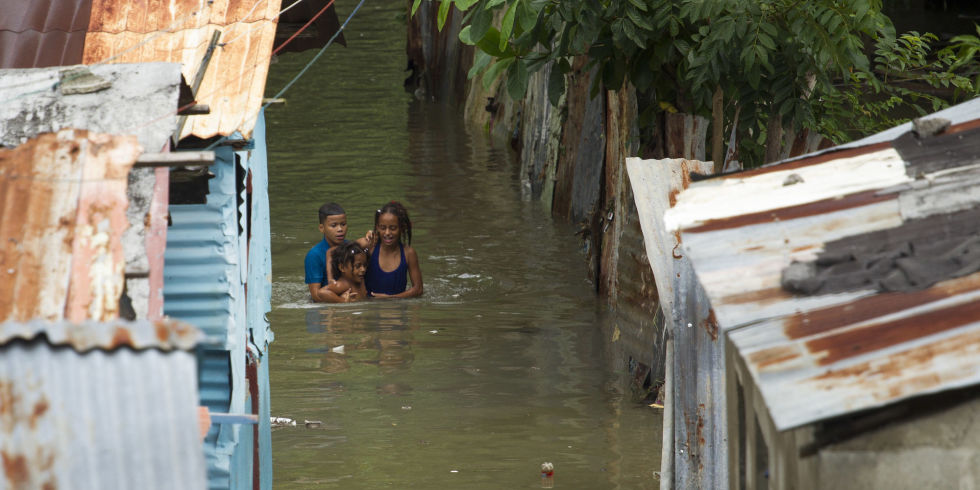
And then there's the Zika virus. The largest concentration of Zika cases in the United States is in and around Dade County, which may be spared the direct impact of the storm, but a huge rain event like Matthew quite obviously would leave massive amounts of standing water within whichAedes aegypti, the mosquito that carried the virus, could breed and thrive.
(A large part of the hot zone is at an elevation of nine feet above sea level. Some predictions have the area being inundated by a 12-foot storm surge.)
And it is not just puddles, either. Think about how water can pool in piles of debris, and in scattered wreckage. Think about endless heaps of worthless household junk. Think about thousands of evacuees leaving the current hot zones in and around Miami. Now think about all the crews coming from all over the country to help with the recovery effort over the next several months, walking amid the debris, turning it over in the heat that always follows a hurricane. Now think about all those crews going back to Iowa or Maine.
RELATED STORY

The most direct precedent probably is the experience of Hurricane Katrina in 2005. A 2008 report from the Centers for Disease Control demonstrated how the mosquito-borne West Nile virus spiked in the immediate aftermath of the storm.
The immediate increase in cases may be attributed to increased human exposure to mosquitoes. Tens of thousands of persons in the hurricane-affected region were living in damaged housing or were waiting outside for days to be evacuated. The sudden decrease in WNND cases in the hurricane-affected areas 3 weeks after landfall could be attributed to reduced human exposure caused by eventual evacuation and aerial application of insecticides. The increase in WNND incidence in 2006 might also be due to increased human-mosquito exposure as a result of mosquito larval habitat creation (root ball voids from fallen trees, and flooded abandoned swimming pools), continued substandard living conditions, and increased outdoor reconstruction activities.
One of the abiding principles of the environmental movement always has been that the natural world—which includes human beings—is an interlocking series of systems, each dependent on the other. In the ludicrous pushback against the reality of the climate crisis, this regularly gets mocked by people who are well paid to be stupid. But the fact is that climate scientists have been warning us about the dangers of warmer oceans, which cause more intense and long-lasting storms, which can break down the space program and unleash a tropical disease.
None of these things can happen without the other things happening. That's the way this thing works, for good or ill.
Study provides new insights into Zika's rapid infection and risk for transmission
Published on October 7, 2016 at 4:20 AM
Though first documented 70 years ago, the Zika virus was poorly understood when it burst onto the scene in the Americas in 2015. In one of the first and largest studies of its kind, a research team lead by virologists at Beth Israel Deaconess Medical Center (BIDMC) has characterized the progression of two strains of the viral infection. The study, published online this week in Nature Medicine, revealed Zika's rapid infection of the brain and nervous tissues, and provided evidence of risk for person-to-person transmission.
"We found, initially, that the virus replicated very rapidly and was cleared from the blood in most animals within ten days," said corresponding author James B. Whitney, PhD, a principal investigator at the Center for Virology and Vaccine Research (CVVR) at BIDMC. "Nevertheless, we observed viral shedding in other bodily fluids such as spinal fluid, saliva, urine and semen, up to three weeks after the initial infection was already cleared."
Whitney and colleagues infected 36 rhesus and cynomolgus macaques with strains of the Zika virus derived from Puerto Rico and Thailand. Over the next four weeks, the scientists tested blood, tissues, cerebrospinal fluid (CSF) and mucosal secretions for the presence of Zika virus, as well as monitored the immune response during early infection. Their data shed new light on the previously little-studied virus, and might help explain how Zika causes the devastating neurological complications seen in adults and unborn babies.
"Of particular concern, we saw extraordinarily high levels of Zika virus in the brain of some of the animals - the cerebellum, specifically - soon after infection," said Whitney, who is also assistant professor of medicine at Harvard Medical School and an associate member of the Ragon Institute of MGH, MIT, and Harvard. "Only one in five adults has noticeable symptoms of infection. However, if our data translate to humans, there may be need for enhanced clinical vigilance for any persons presenting with unusual neurological symptoms, and they should be tested for Zika infection."
Though first documented 70 years ago, the Zika virus was poorly understood when it burst onto the scene in the Americas in 2015. In one of the first and largest studies of its kind, a research team lead by virologists at Beth Israel Deaconess Medical Center (BIDMC) has characterized the progression of two strains of the viral infection. The study, published online this week in Nature Medicine, revealed Zika's rapid infection of the brain and nervous tissues, and provided evidence of risk for person-to-person transmission.
"We found, initially, that the virus replicated very rapidly and was cleared from the blood in most animals within ten days," said corresponding author James B. Whitney, PhD, a principal investigator at the Center for Virology and Vaccine Research (CVVR) at BIDMC. "Nevertheless, we observed viral shedding in other bodily fluids such as spinal fluid, saliva, urine and semen, up to three weeks after the initial infection was already cleared."
Whitney and colleagues infected 36 rhesus and cynomolgus macaques with strains of the Zika virus derived from Puerto Rico and Thailand. Over the next four weeks, the scientists tested blood, tissues, cerebrospinal fluid (CSF) and mucosal secretions for the presence of Zika virus, as well as monitored the immune response during early infection. Their data shed new light on the previously little-studied virus, and might help explain how Zika causes the devastating neurological complications seen in adults and unborn babies.
"Of particular concern, we saw extraordinarily high levels of Zika virus in the brain of some of the animals - the cerebellum, specifically - soon after infection," said Whitney, who is also assistant professor of medicine at Harvard Medical School and an associate member of the Ragon Institute of MGH, MIT, and Harvard. "Only one in five adults has noticeable symptoms of infection. However, if our data translate to humans, there may be need for enhanced clinical vigilance for any persons presenting with unusual neurological symptoms, and they should be tested for Zika infection."
Like in humans, Zika infection in the experimental primates appeared relatively mild, producing fever and an increase in blood cells associated with the immune response. All recovered without intervention. But while the virus was cleared from the blood stream within ten days, the researchers observed Zika virus in urine as soon as two days after infection in some subjects. By the third day after infection, Zika was detectable in the saliva of up to half of the subjects, where it remained until the study ended at 28 days after infection.
"This underscores the need to understand what's happening in anatomic reservoirs where the virus may hide for a long time," said Whitney.
Early in infection, the researchers found high levels of Zika in the genital tracts of both sexes. Zika remained detectable in semen and in uterine tissues until the end of the study. The first sexually transmitted case of Zika in humans was documented in 2007, but these new findings suggest transmission may occur long after Zika symptoms - if they ever appeared - resolve. Because the researchers found high levels of the virus in semen and uterus, but little in vaginal secretions, the findings may also illuminate sexual transmission of Zika.
"We found that male-to-female transmission may be easier, while female-to-male may be less likely," said Whitney. "Nonetheless, the high levels of Zika we observed in the uterus underscore the danger to a developing fetus."
The new study also highlights the need for the rapid development of vaccines and therapies against the virus. Zika infection in pregnant women has been shown to lead to fetal microcephaly and other major birth defects. The World Health Organization declared the virus epidemic a global public health emergency on February 1, 2016.
Source:
Beth Israel Deaconess Medical Center
"This underscores the need to understand what's happening in anatomic reservoirs where the virus may hide for a long time," said Whitney.
Early in infection, the researchers found high levels of Zika in the genital tracts of both sexes. Zika remained detectable in semen and in uterine tissues until the end of the study. The first sexually transmitted case of Zika in humans was documented in 2007, but these new findings suggest transmission may occur long after Zika symptoms - if they ever appeared - resolve. Because the researchers found high levels of the virus in semen and uterus, but little in vaginal secretions, the findings may also illuminate sexual transmission of Zika.
"We found that male-to-female transmission may be easier, while female-to-male may be less likely," said Whitney. "Nonetheless, the high levels of Zika we observed in the uterus underscore the danger to a developing fetus."
The new study also highlights the need for the rapid development of vaccines and therapies against the virus. Zika infection in pregnant women has been shown to lead to fetal microcephaly and other major birth defects. The World Health Organization declared the virus epidemic a global public health emergency on February 1, 2016.
Source:
Beth Israel Deaconess Medical Center
Subscribe to:
Posts (Atom)